

Buying SFR Portfolios in Phoenix: 2026 Investor Guide and Execution
Investors are increasingly looking to Phoenix for stable cash flow and long-term appreciation, driven by strong population growth and constrained for-sale housing. If you are evaluating portfolio buys, this guide walks you through underwriting, deal structure, financing, and execution so you can move from opportunity to closed transaction with confidence.
In the paragraphs that follow you will find practical steps, sample underwriting checkpoints, and market-focused tactics designed for institutional and private buyers. Here we focus on the essentials of buying sfr portfolios in phoenix, the risks to manage, and where experienced local brokers add the most value.
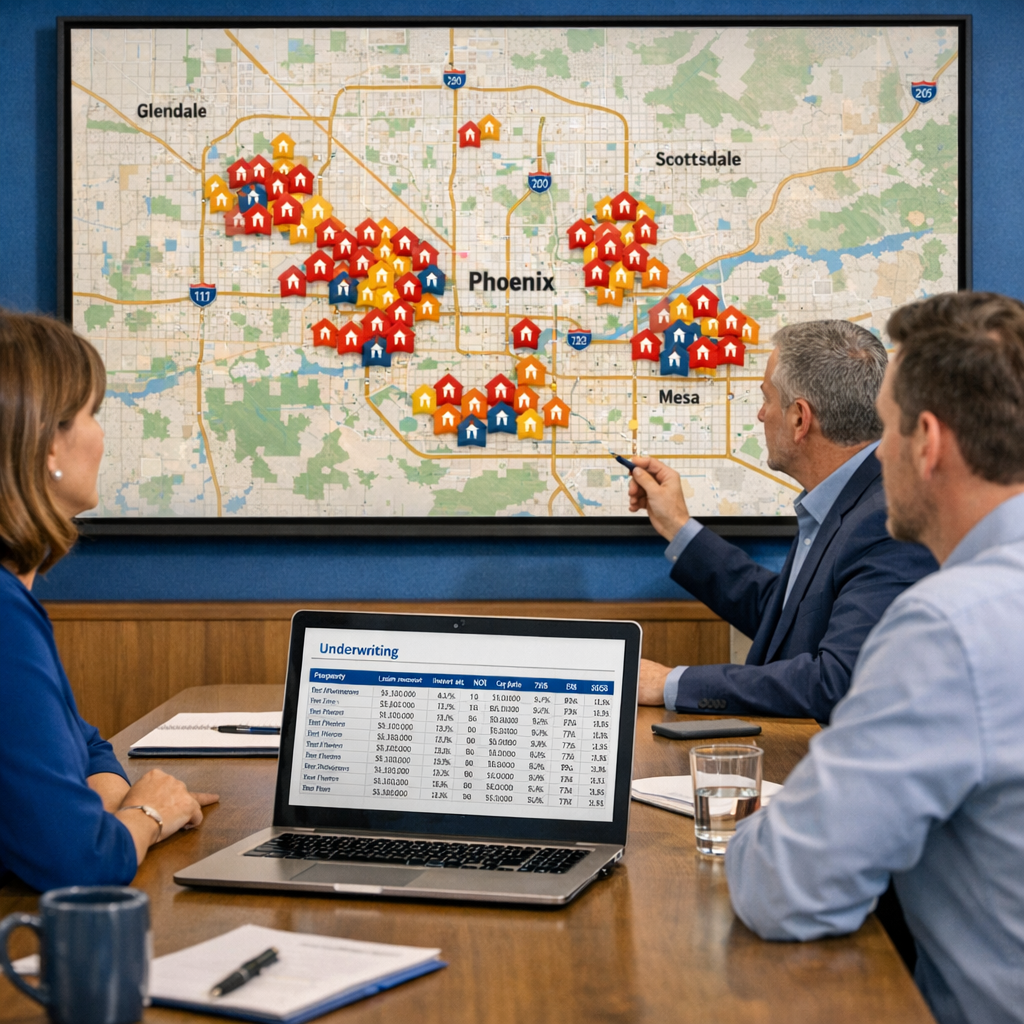
Buying SFR Portfolios in Phoenix: Market Snapshot
Why Phoenix matters now. Greater Phoenix has seen years of net migration, job creation, and housing demand that support single-family rental investing. Submarkets like the East Valley, West Valley, and parts of North Phoenix show different rent trajectories and cap rate expectations, so micro-market selection matters.
Key indicators to watch:
- Population and job growth by MSA segment, not just citywide trends.
- New housing starts and for-sale availability, which affect long-term rental demand.
- Local rental rates, vacancy trends, and turnover velocity in specific ZIP codes.
Why Buy SFR Portfolios Here
Buying a portfolio rather than single assets speeds scale and reduces transaction overhead, but it also introduces operational complexity. Benefits include:
- Economies of scale on property management and rehab projects.
- Faster portfolio yield accretion when units are mispriced or under-managed.
- Portfolio-level financing options and institutional interest for bulk acquisitions.
Objections investors raise often include concerns about management intensity and capex. The right operator and a disciplined value-add plan solve both issues.
How to Underwrite an SFR Portfolio
Underwriting is where deals live or die. Focus on these core inputs:
- Current net operating income, with tenant-paid utilities and vacancy adjustments clearly identified.
- Market rents by floorplan and age, not blended historical rents.
- Turnover and turnover costs, including rehabs between tenants and marketing fees.
- Realistic expense growth assumptions, property management line items, and capital reserves.
Practical tip: build a unit-level model for the first 30 properties in a large portfolio, then extrapolate using proven segmentation for the rest. This reduces error from blended assumptions.
Deal Structure, Due Diligence, and Timeline
Typical structure elements for portfolio purchases:
- Purchase agreement with phased closing or escrow holdbacks tied to occupancy and condition thresholds.
- Environmental and title reviews, with spot inspections across the portfolio and a prioritized list of rehab items.
- Seller-provided rent rolls, tenant files, and historic maintenance records, validated by third-party property audits.
Due diligence timeline often runs 30 to 90 days depending on portfolio size and loan conditions. Plan for contingency capital and realistic closing windows.
Financing Options for SFR Portfolios
Common financing paths include:
- Portfolio loans from regional banks or life companies that underwrite to stabilized NOI.
- Agency-backed financing where eligible, for scaled portfolios meeting borrower requirements.
- Bridge financing for rapid acquisitions followed by long-term replacement debt or sale-lease setups.
Work with lenders early to align covenants, interest-only periods, and capex reserves to your value-add plan.
Value-Add Strategies That Work in Phoenix
- Renovation and unit modernizations targeting 10 to 20 percent rent bump where demand exists.
- Professionalizing management to reduce turnover and enforce lease terms consistently.
- Utility conversions or rent re-structuring where tenant-paid utilities can be standardized.
Small, repeatable upgrades across many units often deliver stronger portfolio IRR than a few oversized capital items.
Sourcing Deals and Working with Brokers
Portfolio deals move fast and often off-market. Steps to improve sourcing:
- Build relationships with local brokerage teams that specialize in multifamily and SFR portfolios.
- Maintain a ready financing proof-of-funds package for quick offers.
- Consider bulk purchase platforms and auction channels when speed matters.
Vestis Group specializes in Arizona transactions and can connect you to off-market portfolios, underwriting support, and buyer representation through every stage. Explore our services at Brokerage Services and review current offerings on our For Sale Listings page.
Common Pitfalls and How to Avoid Them
- Over-relying on seller-provided financials without independent verification.
- Underestimating turnover and vacancy during lease-up periods.
- Failing to align financing timing with rehabilitation schedules.
Mitigation: insist on unit-level audits, build conservative reserves, and schedule lender check-ins at underwriting and pre-close.
Frequently Asked Questions
How do I value a SFR portfolio versus individual single-family buys?
Value is driven by stabilized NOI and comparable cap rates for similar portfolios. Portfolios trade differently because of scale, expected management efficiencies, and buyer depth.
What financing terms should I expect for a bulk SFR purchase?
Expect a mix of bridge and long-term portfolio loans. Terms depend on NOI, borrower track record, and collateral quality. Life companies and regional banks are common partners.
How much reserve should I budget for rehabs and vacancy?
Plan for a 5 to 10 percent operating reserve plus a separate 5 to 15 percent capex reserve depending on property condition and age.
Are off-market SFR portfolios common in Phoenix?
Yes, many bulk sales are brokered quietly to preserve tenant stability and pricing leverage. Building broker relationships is essential.
What are the biggest operational challenges after closing?
Turnover management, timely maintenance, and consistent leasing processes. Scaling a property management platform early reduces long-term friction.
Get Expert Help Buying or Selling Portfolios
Ready to evaluate a portfolio? Work with a Phoenix team that understands underwriting nuances and local execution. Visit Phoenix Multifamily For Sale for market research and current opportunities, or contact our team directly at https://vestis-group.com/contact to discuss acquisition strategy.
Conclusion
Buying SFR portfolios in Phoenix is a compelling way to scale rental income and capture market growth. The trick is disciplined underwriting, verified due diligence, and experienced local execution. Start with solid unit-level data, lock credible financing, and lean on a broker who knows Phoenix submarkets. That approach turns potential into predictable returns.
About Vestis Group
Vestis Group is a Phoenix-based real estate brokerage helping investors, owners, and buyers navigate
multifamily, commercial, and residential investment real estate across Metro Phoenix and Arizona.
Our team supports acquisitions, dispositions, leasing strategy, and tenant representation with market-driven guidance and execution.
Explore Our Services & Listings
- Brokerage Services (Multifamily, Commercial, Residential)
- For Sale Listings
- Phoenix Multifamily For Sale
- Arizona Commercial Real Estate For Sale
- Homes & Condos For Sale in Phoenix
- Leasing
- Tenant Representation
- Phoenix Market Research
Talk With Vestis Group
📞 Call 602-281-6202
📩 Email info@vestis-group.com
🔗 Contact: https://vestis-group.com/contact